Food safety
Gloves Protect the Food
If your gloves touch something that isn’t clean, change them.
The video didn’t load. Please refresh the page and try again.
Read the guide: Gloves and handwashing in food businesses →
Suits: Hospitality and food service · Healthcare and aged care · Retail
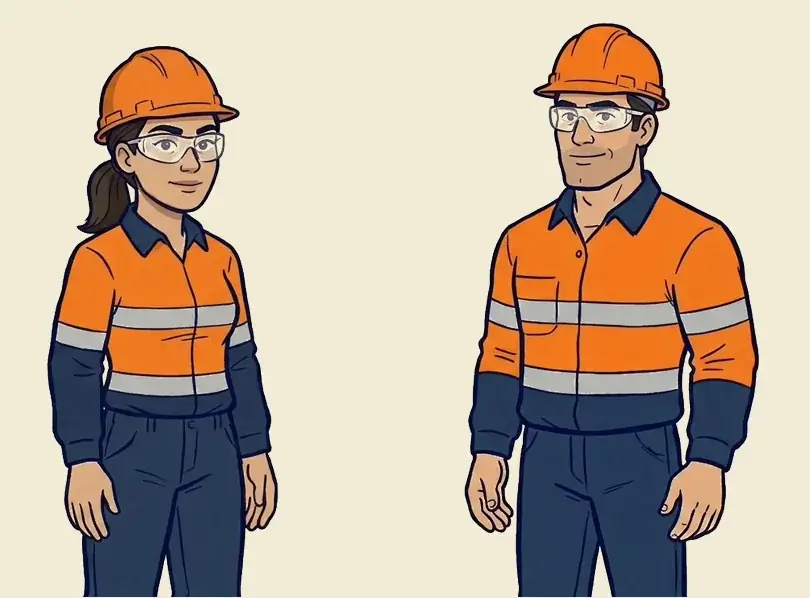
Meet the hospitality crew in this episode →


What happens in this episode
Lee takes a customer’s cash in his food gloves, then reaches straight for the burger. Sophie, the supervisor, stops him.
The video freezes on the hazards, named the way FSANZ’s Safe Food Australia does: cross-contamination and contaminated gloves. It asks: Stop Lee. How should this be done safely?
Then we see the SafeLee way: once the gloves have touched money they aren’t clean, so Lee takes them off and bins them. He washes his hands at the hand basin with soap and warm running water, dries them on a paper towel, puts on a fresh pair, and only then goes back to the food.
Why it matters
- Gloves protect the food, not the worker’s hands. Once they’ve handled money they can pass germs on to food that won’t be cooked again.
- Australia has about 4.7 million cases of foodborne illness a year.
- Gloves don’t replace handwashing: hands are washed and dried before a fresh pair goes on.
Source: Food Standards Australia New Zealand, Safe Food Australia (2023).
Key points
- Gloves protect the food, not your hands.
- Touched money? Gloves off, wash, fresh pair.
- Not sure? Ask your supervisor.
- If your gloves touch something that isn’t clean, change them.
A different topic from Right Gloves for the Job, where chemical gloves protect the worker.
In your version
- Your business’s logo on the opening card and throughout, instead of “Your Business Here”.
- A short quiz after the video. Workers need every answer right for it to count, with as many tries as they need.
- A one-page safe work guide to download, with links to your state’s regulator.
- A record of who watched, when, and how they went, in SafeLee’s built-in training records or your own LMS.
Use it at a toolbox talk
- Play the video (under two minutes).
- At the freeze, ask the crew what should happen, before the video shows them.
- Ask: “What does your glove do when you’ve touched money, rubbish or your phone?” Check there’s soap, warm water and paper towel at the hand basin.
More ideas: toolbox talk topics.
Related guides
- Gloves and handwashing in food businesses
- Toolbox talk topics
- Safety induction checklist
- WHS training requirements
Check the rules where you work
Food safety laws are enforced by your state or territory health department or food authority, and in most places by your local council. Choose where you work for their guidance.
Queensland Health Queensland
Food Act 2006 (Qld). Local councils license and inspect most food businesses.
NSW Food Authority New South Wales
Food Act 2003 (NSW). Local councils inspect most retail food businesses.
Safe Food Victoria Victoria
Food Act 1984 (Vic). Local councils register and regulate most food businesses.
SA Health South Australia
Food Act 2001 (SA). Local councils inspect most food businesses.
WA Department of Health Western Australia
Food Act 2008 (WA). Local governments register and inspect most food businesses.
Department of Health Tasmania Tasmania
Food Act 2003 (Tas). Local councils register and inspect food businesses.
ACT Health (Health Protection Service) Australian Capital Territory
Food Act 2001 (ACT). The Health Protection Service registers and inspects food businesses.
NT Health Northern Territory
Food Act 2004 (NT). NT Health environmental health officers register and inspect food businesses.
Food Standards Australia New Zealand (FSANZ)
Develops the Food Standards Code. A national standards body, not an enforcement agency.
General information only, not legal advice. Food safety rules are enforced by state and territory food regulators and, for many businesses, local councils. Check the requirements for your business, follow your food safety program, and talk to your council or food regulator if you’re unsure. SafeLee episodes and guides support, and don’t replace, your food safety training and supervision.
Sources
- Food Standards Australia New Zealand, Safe Food Australia: A guide to the food safety standards (4th edition, 2023)
- Australia New Zealand Food Standards Code, Standard 3.2.2 Food Safety Practices and General Requirements
- Standard 3.2.2A Food Safety Management Tools
This episode is awareness training mapped to Australia’s food safety standards, and it names the hazard the way FSANZ’s Safe Food Australia does. It supports, and does not replace, your business’s own food safety training, food safety program and procedures. Check your state or territory’s food safety requirements and follow your shop’s procedures.
This video, with your logo.
Every SafeLee episode comes branded for your business, with a quiz, a safe work guide and training records.