Short answer: An LMS (learning management system) is software that delivers training and records who completed it. Large businesses usually have one. Many small and medium businesses don’t, and don’t need a big one: a spreadsheet works for a handful of staff, and a simple built-in system covers the rest. If you already have an LMS or HR platform, safety training can usually be loaded straight into it.
Watch: The High Shelf, about 90 seconds. See the episode →
The video didn’t load. Please refresh the page and try again.
Two businesses, two answers
Rachel runs a commercial cleaning company in Newcastle with 15 cleaners across 20 sites, mostly working nights. She has no LMS. Training happens at induction and when a supervisor gets a chance, and the records live in a folder.
Ben is the HR manager at a logistics company with 300 staff across three depots. They already use an HR platform with a learning module, where all policy and compliance training lives.
Both want the same thing: workers trained on real hazards, and proof they understood. They need different set-ups to get there.
What an LMS actually does
In plain terms, an LMS:
- delivers training: videos, slides, quizzes
- assigns it to the right people, with due dates
- records completions and results
- reminds people when training is due or overdue
- reports for managers and auditors
Some are huge (built for universities and corporates) and some are simple. Most HR and payroll platforms now include a basic learning module.
SCORM, explained in one paragraph
If you’ve heard “SCORM” and nodded politely: it’s a standard file format that lets training made by one company run inside another company’s LMS and report back results. If your LMS “supports SCORM”, you can load training from outside providers, and completions and quiz scores land in your system automatically.
Do you have to have an LMS?
No. The law expects you to train workers and it’s sensible to keep records; it doesn’t care what software you use. The question is what makes it easy for your business to train people properly and keep good records.
| Your situation | What usually works |
|---|---|
| Under about 10 workers, all on one site | A spreadsheet training matrix and toolbox talk records |
| 10 to 200 workers, shifts or several sites, no LMS | A simple built-in system: training on workers’ phones, automatic records and reminders |
| Already have an LMS or HR platform with learning | Load safety training into it (SCORM), so everything sits in one place |
| Large business with complex compliance needs | A full LMS, usually already in place |
Rachel’s answer
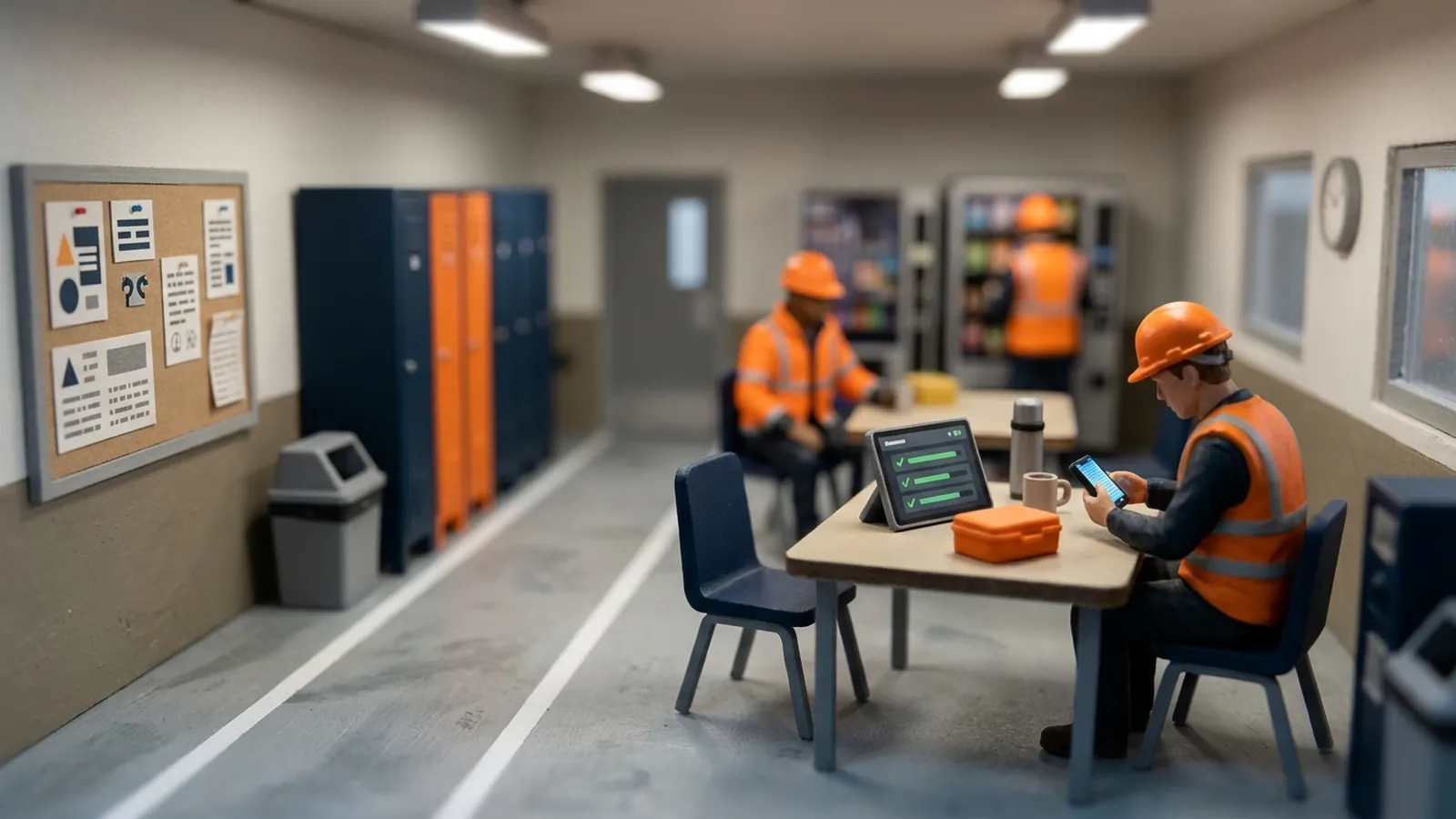
Rachel doesn’t want another big system to learn. What works for her: each cleaner gets a personal link on their phone, watches a short episode on the hazards they face (chemicals, slips, manual handling, working alone), answers a few questions, and the record is kept automatically. Rachel gets a weekly email of who’s overdue. No passwords, nothing to install.
Ben’s answer
Ben doesn’t want a second system. The safety episodes and quizzes load into his existing platform, assigned by depot and role, and the results sit alongside everything else in each worker’s record.
Questions to ask before you choose
- Can workers do it on their phone, without a password or an app?
- Does it check understanding, not just whether the video played?
- Does it remind people when refreshers are due?
- Can you show an auditor who did what, when, and their results?
- Does it work with what you already have? If you have an LMS, can the training load into it?
- What happens to your records if you leave?
- What’s the real cost per worker, including set-up and admin time?
SafeLee works both ways: a simple built-in LMS for businesses without one, and SCORM packages that load into your existing LMS or HR platform. See SafeLee’s training records and how SafeLee works.
What the law says, in plain English
Safety laws don’t require an LMS. They expect businesses to give workers suitable training and instruction for their work. Keeping clear records is how you show you’ve done it, whatever system you use.
Common questions
What’s the cheapest way to track safety training?
For a small team, a spreadsheet. As you grow, a simple system usually saves more admin time than it costs.
Can we use our HR platform’s learning module?
Often, yes. If it supports SCORM, outside training can be loaded into it and results recorded automatically.
Do workers need their own email address?
Not with every system. Some, like SafeLee, use personal links, sent by email or text, or a printed QR code.